
Padel Shoes vs Tennis Shoes: Can You Use What You Own?
Check the shoes you own before buying again, with a dated comparison of four exact court-shoe versions and clear limits on what their specifications prove.
GuideBy PadelFormat Editorial TeamPublished 8 min read
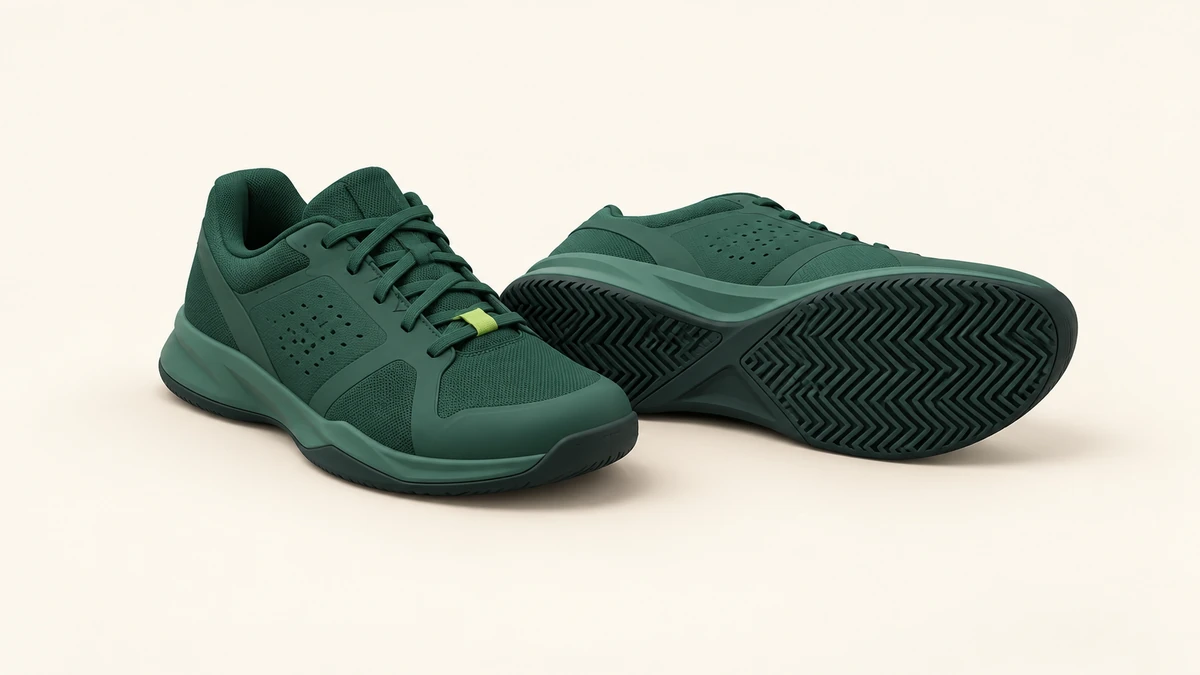
Quick answer
You can use suitable tennis shoes for padel, especially when you are trying the sport. Check the exact court version, the condition of the sole and how securely the shoe holds your foot. Ask your club whether that outsole suits its surface before buying a second pair.
There is no useful blanket answer that makes every padel shoe better than every tennis shoe. A comparison of four manufacturer listings below shows why the model and court version matter. These are published specifications, not results from a shoe test.
TL;DR
- Start with the tennis shoes you own if they fit securely, remain in good condition and suit the club's court.
- Check the full model name. “All Court”, “Clay” and “Padel” identify different versions, not interchangeable labels.
- Lateral support is not exclusive to padel shoes. Tennis models can have substantial support features too.
- A padel-specific shoe is worth considering when you need a better surface match or fit. Playing once a week is not, by itself, a replacement deadline.
- Do not choose from weight, grip or injury-prevention claims unless the comparison explains what was measured.
On this page
When tennis shoes are a reasonable starting point
For a first booking, the sensible question is whether your existing pair is suitable for that court. The LTA says beginners can use suitable court trainers and highlights reliable grip and lateral support. It advises avoiding running shoes where possible because they are mainly designed for forward movement.1
Tell the club the full shoe model, including its surface version. If you cannot find the name, send a photograph of the label and outsole. “I have tennis shoes” leaves the most useful detail unanswered.
Check your pair before the session. Look for worn-smooth areas, a separating sole or damage around the upper. When trying them on, use your playing socks and check both feet. Your heel should not lift noticeably and your foot should not slide around inside the shoe. You also need room across the forefoot without squeezing it. ASICS gives similar fit advice for tennis shoes: a secure fit without excess movement, with enough width for the foot.2
Those checks are a practical shortlist, not a certified safety test. If the club advises against your outsole, or the shoe does not hold your foot comfortably, solve that problem before playing. A familiar brand name will not fix a poor fit.
If this is your first session, the beginner booking and equipment guide covers racket hire, balls and what to ask the venue.
What actually differs between the shoes?
The outsole is a useful place to start. ASICS distinguishes clay tennis soles with a herringbone or zigzag pattern from hard-court soles with a modified herringbone pattern. That is manufacturer guidance about tennis surfaces; it does not establish which shoe will work best on your particular padel court.2
The rest of the shoe matters as well. Support around the foot, the upper, cushioning and fit all belong in the comparison. You cannot read those properties reliably from the word “padel” on a shop filter.
Some broad category descriptions are too neat to use as buying rules. ASICS's 2021 padel guide describes padel shoes as having a stiffer sole and softer upper than tennis shoes. It does not provide a model-by-model stiffness dataset alongside that statement. Treat it as the manufacturer's general design explanation, not a measured ranking of every current shoe.3
For a purchase, go one level deeper: compare the exact products you can actually try on.
Four exact versions compared
This reference compares manufacturer pages checked on 27 October 2026. We selected two surface versions from one tennis family, then two padel models with different listed construction features. The sample is deliberately small and is not representative of the whole market.
| Exact model and reference | Listed court use | Relevant listed features | What this does not establish |
|---|---|---|---|
| Babolat Propulse Fury 3 All Court Men 30F26208C | All Court tennis | Power Belt midfoot strap; S-Block reinforcement; KPRS-X 2 heel cushioning | Its grip on your club's padel surface |
| Babolat Propulse Fury 3 Clay Men 30F26425C | Clay tennis | The same three named support and cushioning features are listed | That it performs identically to the All Court version |
| Babolat Premura 3 Men 3A0F26B752 | Padel | Matryx Micro upper; Michelin Padel sole; outsole flex grooves | A measured grip, comfort or durability advantage over the tennis models |
| ASICS GEL-RESOLUTION X PADEL Men 1041A492.403 | Padel | DYNALACING; DYNAWALL extending into the heel; AHARPLUS rubber; forefoot GEL | A measured support advantage over the other three versions |
Sources: Babolat's All Court, Clay and Premura 3 pages; ASICS Singapore for the specified GEL-RESOLUTION X PADEL colour reference. The linked pages identify the products, not UK stock or a promise that a retailer sells the same colour reference. Download the dated reference and source URLs.
What the comparison tells you
The two Propulse Fury 3 listings are the clearest reason to check the complete name. They belong to the same tennis family and list the same named support features, yet Babolat assigns different surface types. Searching only for “Propulse Fury 3” is not enough to identify the version you are buying.
They also show that tennis shoes can include a midfoot strap and lateral reinforcement. Those features are not evidence that either version is suitable for every padel court. They do make “tennis shoes have no lateral support” an unhelpful generalisation.
The padel listings describe different constructions too. Premura's flex grooves and ASICS's named support components are information to investigate, not directly comparable scores. Counting technologies would not tell you which shoe fits your foot or grips your court better.
What we left out
We have not weighed these shoes, tested their traction, measured stiffness or compared wear after matches. No players were recruited for this reference. We cannot calculate a performance winner from the listings.
We also left weight out of the table. Both Babolat tennis pages list 370 g, but their technical fields do not state a reference size or whether the figure represents one shoe. That is too little detail for a fair weight comparison. The Premura page checked does not give a comparable weight figure.456
This table records selected features explicitly described in the pages. An omitted feature is not proof that the shoe lacks it. Women's versions, different generations and other colour references require their own checks.
Check the court before choosing the sole
Ask the club two questions: what surface do you have, and what footwear do you recommend or restrict? Use its answer when you speak to a retailer. If you play at several venues, check whether the same pair is suitable at each.
Avoid turning “clay shoes can be an option” into “every clay shoe is ideal for padel”. Equally, do not interpret “All Court” as a guarantee for every surface in every racket sport. Babolat labels the two Propulse models differently for a reason; neither product page is a compatibility certificate for your venue.
Inspect the outsole photograph on the exact product page, not just a side-on marketing image. Match the product code, generation and surface name between the manufacturer's description and the shop listing. If the shop calls a tennis model a padel shoe, ask which version it is selling.
For the wider adjustment between the sports, our padel and tennis comparison covers the court, equipment and wall game. The shoe decision still comes back to the pair on your feet and the court you book.
When buying a separate padel pair makes sense
A new pair has a clear purpose when your existing shoes fail the fit or surface checks, or need replacing because of their condition. If you play regularly, you may also prefer a dedicated pair so you do not have to compromise between the requirements of two venues.
That is a purchase decision, not a claim that weekly play makes a tennis shoe unsuitable. Frequency alone does not reveal outsole condition, fit or court compatibility.
Make a short list using the information you can verify:
- Court version: the exact surface name and your venue's advice.
- Fit: comfortable width, a secure heel and no unwanted movement inside the shoe.
- Construction: features you want to compare in person, rather than a count of branded technologies.
- Return conditions: whether you can try the shoes indoors with your usual socks before committing.
The padel shoe buying guide gives model shortlists and links to offers. Use it after deciding what your current pair is missing. The four versions in this article are evidence examples, not a ranked buying list.
Questions worth asking before you buy
Can one pair cover tennis and padel?
Possibly. Confirm the exact outsole is appropriate for both venues and that the fit works for you. “Both are court sports” is not enough information, but neither is a sport label alone a reason to buy another pair.
Does a padel label prove better grip or fewer injuries?
No such comparison was established by this reference. The pages describe intended use and construction; they do not provide a shared test that lets us rank these four shoes for grip or injury outcomes. Keep product descriptions separate from those stronger claims.
What should I ask a retailer?
Give them the full model you own, your club's surface information and the fit problem you want to solve. Ask which exact court version they recommend and why. Get the product code before ordering, particularly when two listings share the same model name.
Sources
Manufacturer specifications checked 27 October 2026. Advice pages are identified by their original dates where shown. This is a documentary comparison, not laboratory or on-court testing.
- LTA Padel, How to get started in padel, undated. Beginner footwear and lateral-support guidance.
- ASICS, Choosing the Right Tennis Shoes, 21 April 2022. Tennis outsole categories and fit advice.
- ASICS, What to look for when buying your padel shoes, racket and kit, 23 September 2021. General design explanation; not a comparative test dataset.
- Babolat UK, Propulse Fury 3 All Court Men, 30F26208C, undated product page.
- Babolat UK, Propulse Fury 3 Clay Men, 30F26425C, undated product page.
- Babolat UK, Premura 3 Men, 3A0F26B752, undated product page.
- ASICS Singapore, GEL-RESOLUTION X PADEL, 1041A492.403, undated product page.